The cost of hotel cleaning goes beyond the time spent by housekeeping staff. Poor task allocation, unnecessary travel between rooms or floors, or a room that needs to be cleaned again after a quality inspection can quickly drive up costs. These losses sometimes go unnoticed in the day-to-day operations of a hotel. Yet they consume additional resources and directly reduce your profit margins.
So, how can you identify these hidden expenses and better control your hotel cleaning budget? Find out in this article!
Hotel Cleaning: What hidden costs are eating Into your profit margins?
Between check-out rooms, stayover cleaning, early arrivals and special requests, housekeeping teams must work at a demanding pace while maintaining the hotel’s cleanliness standards.
However, daily operations do not always go as planned. A room attendant who needs to retrieve forgotten instructions from the head housekeeper, an unnecessary trip between floors, a check-out room that needs to be cleaned again after an inspection, or a delay in communicating room statuses to the front desk… All these situations consume additional time and resources. When repeated every day, they increase room cleaning costs and gradually reduce the hotel’s profit margins.
Three main areas deserve your attention: labor costs, operational organization and service quality.
1. Labor Costs: An underestimated cost per room
Payroll represents a significant share of the budget. However, the hourly wage of a room attendant alone is not enough to calculate the actual cost of a cleaning service. You must also account for employer contributions, paid leave, sick leave, staff turnover and training for new employees. Depending on operating conditions, these additional expenses can increase initial labor costs by approximately 30%.
To assess your expenses, calculate the cleaning cost per occupied room (CPOR). This indicator varies depending on the room category, service level and organization of your housekeeping department. As a general guideline, it can range from €10 to €16 per room, or even more in luxury hotels.
How do you calculate the actual cost of cleaning a hotel room?
The calculation must account for the time required to clean the room and all associated expenses:
Actual hotel room cleaning cost =
(Cleaning time (min) × fully loaded hourly labor cost ÷ 60) + cleaning supplies + linen + equipment + indirect costs
Example:
Labor: 30 min × €18/hour ÷ 60 = €9
Cleaning supplies: €0.80
Linen: €2
Equipment: €0.50
Indirect costs (supervision, coordination, etc.): €1.70
Estimated actual cost = €14 per room
Additional expenses include unexpected absences, staff replacements, overtime and cleaning tasks that take longer than scheduled. Cleaning a check-out room generally takes more time than servicing a stayover room, just as preparing a suite requires more time than a standard room.
Without accurate tracking of the time spent on each type of service, the number of rooms cleaned per employee and the actual cost per room, head housekeepers and operations managers struggle to adjust staffing levels according to occupancy rates and the hotel’s actual activity.
2. Housekeeping organization: Costly travel time and downtime
In a hotel, team productivity also depends on how cleaning rounds are organized. Poor room allocation can quickly increase unnecessary movement and slow down room attendants.
Consider a head housekeeper who assigns rooms on both the third and fifth floors to the same employee, even though other team members are already working in those areas. The employee must repeatedly travel between floors to collect linen, retrieve equipment or reach the remaining rooms. By the end of the day, these movements represent working time that generates no additional cleaning services.
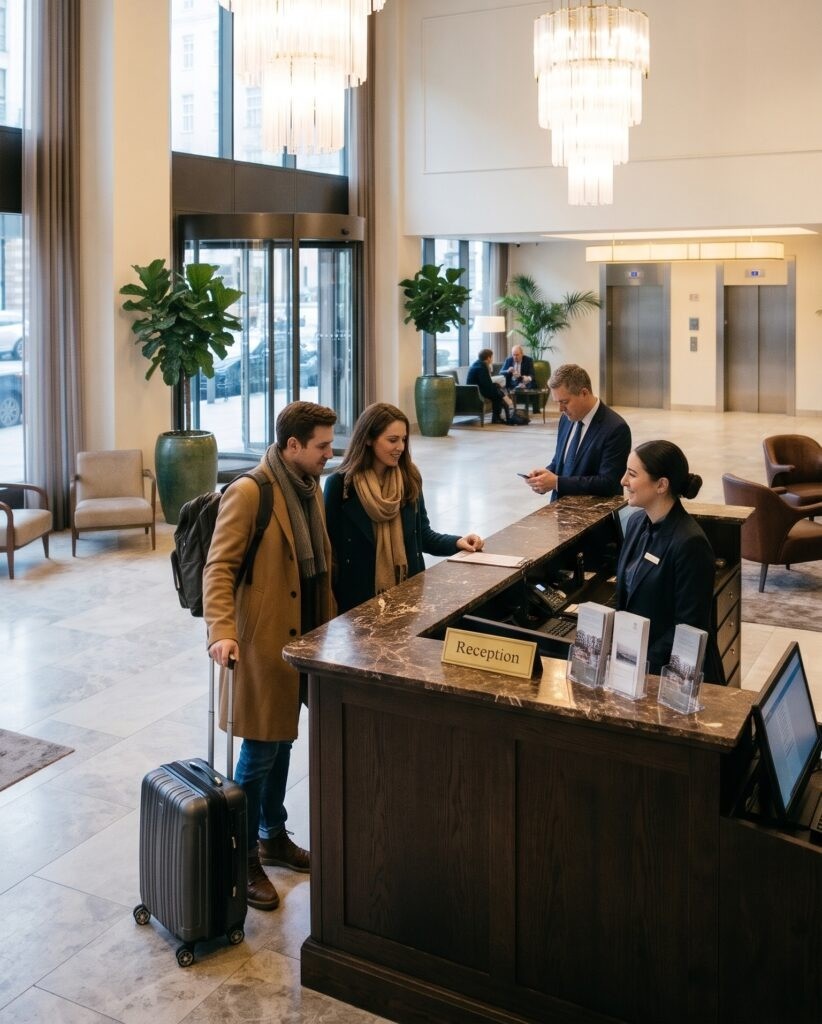
Coordination between the front desk and housekeeping department is another critical area. A guest requesting an early check-in, a late check-out or an urgently prepared room can disrupt the initial schedule. If the front desk communicates this information too late, the head housekeeper must revise room assignments and reorganize team priorities.
High-turnover days make these challenges even greater. When several guests check out in the morning and new arrivals are concentrated in the early afternoon, teams must simultaneously manage check-out cleaning, stayover services and priority requests.
To address these challenges, MoveWORK Flow offers a building editor that creates an accurate digital twin of your hotel. This contextual overview connects rooms, equipment and all departments in real time.
3. Service quality: The hidden cost of rooms that need recleaning
A clean room is not necessarily ready to welcome a guest. Teams must also meet the hotel’s standards and check every detail before approving the service. Streaks on a mirror, missing guest amenities, a poorly cleaned bathroom or an improperly made bed can all require additional cleaning after the head housekeeper’s inspection.
Consider a check-out room: after the room attendant has finished cleaning, the head housekeeper notices something has been overlooked in the bathroom. They request another intervention before approving the room. The employee must interrupt their cleaning round or return to the room to correct the issue. This situation requires additional staff time, cleaning supplies and labor. It may also delay the next guest’s arrival if the front desk is waiting for the room to be approved.
To identify the most frequent issues, you should monitor:
- The non-compliance rate during the first inspection
- The rate of rooms requiring rework after inspection
- The time spent on corrective actions
- Recurring issues by service type
How can you improve your hotel cleaning profit margins?
Improving hotel cleaning profitability does not necessarily mean reducing staff numbers or speeding up cleaning services. Instead, you need to adapt your operational management to the hotel’s actual requirements.
- Adjust staffing levels to occupancy rates: Anticipate staffing needs based on departures, arrivals and peak periods. A day with 40 check-outs does not require the same organization as a day consisting mainly of stayover cleaning.
- Balance room attendants’ cleaning rounds: Allocate rooms according to their location, size and the time required to clean them. This helps head housekeepers avoid assigning too many suites and check-out rooms to a single employee.
- Improve communication between operational teams: Quickly communicate room status changes, guest requests and arrival times. This allows head housekeepers to reorganize priorities without waiting for employees to encounter unexpected situations.
- Standardize cleaning procedures: Establish clear instructions for each room category. Checklists adapted to check-out rooms, stayover rooms and suites help employees maintain the hotel’s standards.
- Analyze differences between schedules and actual operations: Compare planned cleaning times with actual completion times. This helps identify services requiring additional resources and adjust your organization accordingly.
Hotel cleaning: Tools for better operational management
Managing hotel cleaning involves several stakeholders: front desk staff, head housekeepers, room attendants, maintenance teams and even external service providers.
When everyone relies on separate spreadsheets, paper forms or tracking tools, information becomes difficult to share. Hotel management software designed to oversee service operations helps centralize communication and improve coordination between teams.
MoveWORK Flow: The management platform for better hotel cleaning cost control
No two days in the hotel industry are the same: check-outs, arrivals, cancellations and last-minute changes… Managing cleaning operations can quickly become a nightmare. To make things easier, MoveWORK Flow centralizes everything within a single platform. This gives you a complete overview of operations, including room statuses, ongoing cleaning services, pending interventions and rooms ready for guests.

The platform improves coordination between teams. When a guest arrives earlier than expected, a room needs additional cleaning or a piece of equipment is reported as faulty, the information is sent to the right person. Workflows automate the different stages of operations: assigning rooms to employees, validating completed tasks, requesting corrective interventions and monitoring quality inspections.
Managers can also define inspection checkpoints, track non-compliance issues and launch action plans to address recurring problems.
If you work with an external cleaning service provider, collaborative workspaces also make it easier to share information and monitor contractual commitments between the hotel and its service provider. Data collected from the field feeds operational performance indicators, including room cleaning times, deadline compliance, quality compliance rates and the number of corrective interventions. Managers can therefore identify discrepancies, adjust staffing resources and gain better control over costs per room.
myMissions Indoor: The app that supports your housekeeping teams
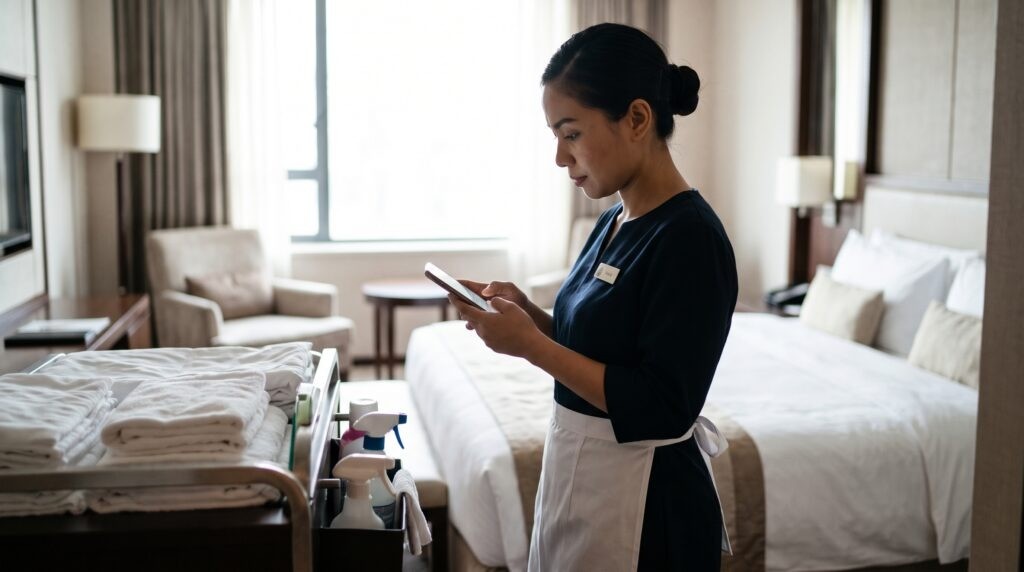
In the field, myMissions Indoor supports room attendants in carrying out their daily tasks. Using their smartphones or tablets, they can access their schedules and view the rooms to clean, tasks to complete and priorities for their cleaning rounds. Assignments can take into account each employee’s availability, skills and allocated floors to distribute workloads more evenly across teams.
Throughout their cleaning rounds, employees record their interventions directly in the app. They can report an issue, attach a photo or log the completion time to ensure full traceability of every service. Head housekeepers therefore have reliable information to monitor the progress of check-out cleaning, stayover services and touch-ups. They can also carry out quality inspections and verify that rooms meet the hotel’s standards.
