
In the ultra-cleaning sector, what truly makes the difference is not intentions but evidence. Your clients want to know exactly what was done, when, by whom, and under which conditions. They want to verify a sensitive intervention in a laboratory, confirm a visit to a critical zone, or check a protocol carried out in a cleanroom. The slightest uncertainty can lead to disputes, a failed audit, or a loss of trust. This is exactly when traceability becomes a major issue.
The solution? An audit trail. Why? Because this tool allows you to work with peace of mind, without ever missing a step in the intervention process. At a glance, you can see all data related to ongoing, completed, and upcoming actions. This level of transparency transforms the way you manage your operations: fewer uncertainties, fewer disputes, greater control, and stronger credibility with your clients. In this article, we guide you step by step through how to set up a high-performance audit trail.
What is an audit trail?
An audit trail is a tool that records and reconstructs, with geolocation, timestamping and stakeholder identification, all actions carried out in the field or within your processes… as if you were there yourself.
In practice, an audit trail takes the form of a digital, timestamped, structured and tamper-proof log that records everything continuously. Who did what? When? Where? Under what conditions? And in accordance with which applicable regulation? Every action must be captured to the second to ensure an accurate reconstruction of the procedures. The information is collected automatically and centralized in a digital interface. This level of requirement also involves reinforced security: strict access control, robust authentication, data encryption…
In addition, nothing should be modifiable without leaving a trace. Traceability must be absolute. Any modification must generate a complete history: previous value, new value, user ID, electronic signature. This level of detail eliminates blind spots and strengthens processes against falsification.
Each record is based on key elements that are essential to any proof of execution:
- The action performed (intervention, quality control, response to a request, validation)
- The user involved
- The exact date and time
- The associated evidence (comment, photo, signature, geolocation)
With this level of visibility, you gain a decisive advantage: certainty.
Certainty that the action was truly carried out, certainty that the data is reliable, certainty that your teams and your clients access accurate, complete and real-time information.

Why deploy an audit trail tool?
In industries where traceability is strategic, a high-performance audit trail becomes a pillar of transparency, compliance and operational efficiency. It clarifies what actually happened and secures the contractual relationship. An audit trail is not just a history but a guarantee of trust, forming the foundation for managing your operations with reliable data and giving your clients complete visibility into the quality of the activities carried out.
An audit trail to optimize your intervention workflows
Today, the audit trail stands out as a key lever for strengthening field supervision and ensuring compliance with your contractual commitments. Why? Because by deploying it, you give your organization a decisive advantage: the ability to manage operations based on facts.
Among other things, an audit trail makes it possible to demonstrate SLA compliance, prove site visits and document quality checks.
And that’s far from its only strength. The operational benefits of a structured audit trail are numerous:
- Compliance with contractual clauses based on contract types
- Reduced errors thanks to real-time monitoring of protocol compliance
- Fewer disputes and penalties thanks to timestamped, tamper-proof evidence
- Full transparency for clients and regulatory authorities
- Streamlined internal and external audits
- Continuous quality improvement supported by enhanced intervention tracking
- Operational time savings through automated logging, digitalized business documents and centralized digital evidence
An audit trail to meet international standards
In an environment of ever-increasing demands, the audit trail provides proof that your processes are well controlled. On one hand, it demonstrates that actions taken comply with established procedures, and on the other, that data management is based on responsible and verifiable practices. In other words, it transforms every operation into evidence, ready to be presented in case of an inspection.
- A cornerstone for GDPR compliance: GDPR requires organizations to demonstrate traceability, security, and justification for any action performed on personal data. The audit trail records every access, modification, and deletion, and associates each event with a timestamped proof. This level of detail becomes crucial during an audit, as it shows that data privacy rules have been followed at every step.

- An asset for your ISO standards: Standards such as ISO 9001, ISO 13485, and ISO 27001 require rigorous record management, transparency of actions, and the ability to provide indisputable evidence. A digitized audit trail perfectly meets these requirements and ensures end-to-end traceability.
How to implement an effective audit trail?
To be fully secure, the audit trail can only exist in digital format. To implement this system, you will need to use a software, platform, or traceability application. But before purchasing a tool, you should follow a structured approach to accurately define your needs.
1. Map the critical processes
Implementing an effective audit trail starts with a thorough analysis of your operational processes. This analysis helps identify all the steps where traceability is essential:
- On-site interventions carried out
- Personnel involved and required authorizations
- Quality checks performed, scoring grids, and authorized inspectors
- Types of validations carried out by managers
- Actions subject to specific regulatory requirements
At this stage, the goal is to understand how data flows, where vulnerabilities lie, and which events could compromise your or your team’s responsibility if they are not properly documented. The more detailed this understanding, the more coherently the future audit trail can be structured, making it as effective as possible.
2. Define logging rules
Once the critical processes are identified, it’s time to define the logging rules. In practice, this means specifying who can do what, with what level of authorization, and which actions must be automatically tracked. These rules should be strict enough to ensure data integrity, yet flexible enough to fit the daily workflow of your teams.
Status changes, comment additions, mission openings, intervention closures, control validations… every important event must leave a reliable record. The evidence then becomes the backbone of the audit trail.
3. Digitize data collection and processing
Without digitization, your audit trail will rely on human reports, which are often incomplete or open to interpretation. Yet, you have no choice but to collect data at the heart of the action, in the field. To overcome these challenges, you have several options:
- A mobile application allowing actions to be tracked directly in the field
- QR codes placed in intervention areas to authenticate location and time
- Connected devices, such as terminals or badge readers, for automatic timestamping of each action
- Biometric authentication
- Software or a platform for identification at a fixed workstation
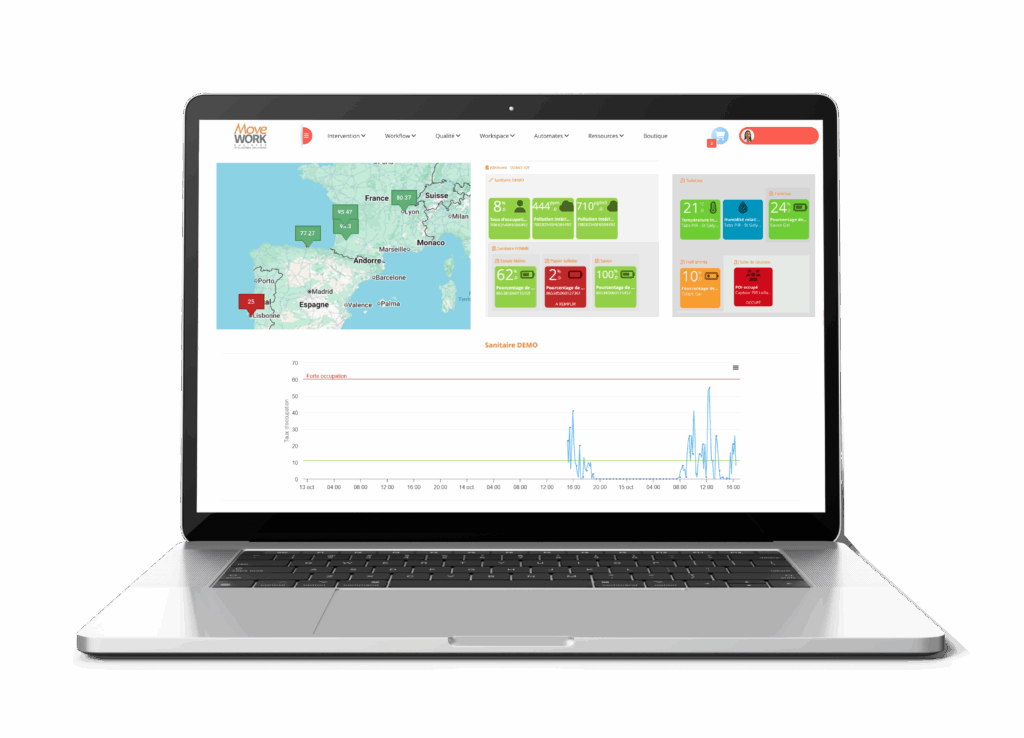
These automated processes make it possible to generate a continuous, precise, and tamper-proof audit trail without adding extra workload for the teams. Indeed, the value of an audit trail lies in its ability to provide a reliable chronology. To achieve this, all information must be consolidated in a single repository that allows the exact sequence of actions to be easily reconstructed. Without a unified foundation, the audit trail becomes fragmented across different tools, increasing the risk of inconsistencies, duplicates, or missing information.
4. Implement automated controls and alerts
An audit trail is fully effective only if it can detect and report anomalies in real time. Alerts play a crucial role here: they notify you immediately when a critical step has not been completed. For example, if an agent finishes an intervention but forgets the mandatory signature required to validate the report in a regulated environment, the system instantly triggers an alert.
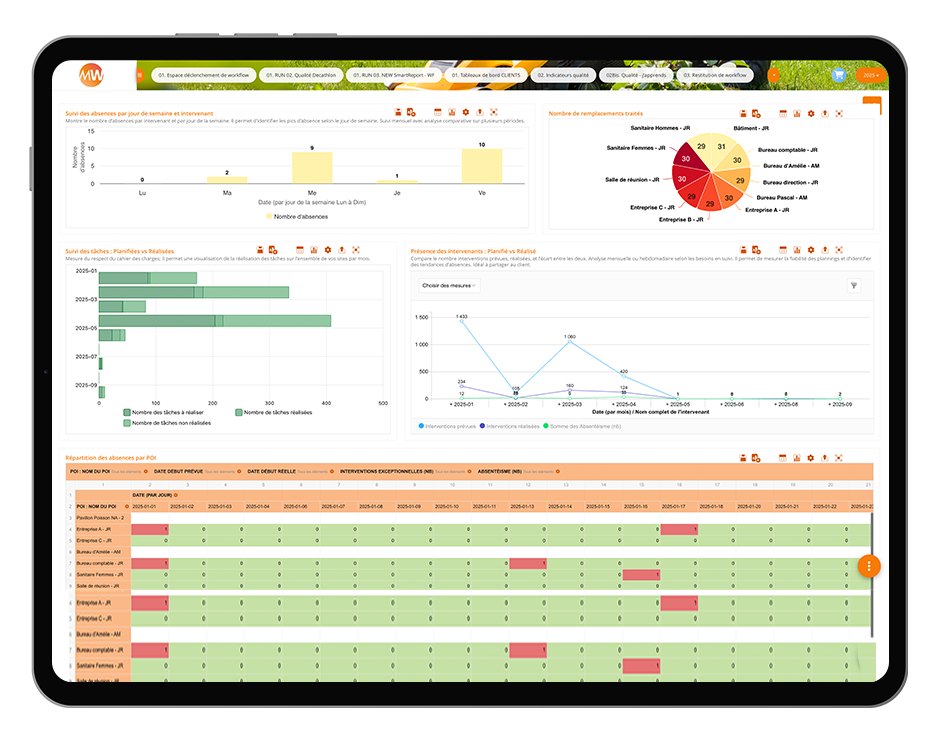
You are thus informed even before the report is submitted, allowing you to correct the situation without delay. Thanks to these alerts, the audit trail becomes a true operational safety net. These automated mechanisms prevent incidents from going unnoticed. By anticipating deviations, you not only improve traceability but also enhance the overall performance of your organization.
5. Train the teams
The performance of an audit trail depends as much on the tool as on the people using it. Training your employees in traceability, explaining the purpose of the system, and showing them how to integrate it into their daily routines is a crucial step. An audit trail is only valuable if every user follows the same rules and adopts the same habits. It is therefore essential to unify practices across teams and sites. The more standardized the usage, the more reliable the data becomes, and the audit trail turns into a strategic tool for managing operations, securing processes, and ensuring compliance.
Which software solutions offer audit‑trail management compliant with European standards?
Now that you know how to implement an audit trail, you need to choose the right tool to support you. To do this, rely on a solution that ensures the reliability, evidence, and compliance of your operations. The tool must be able to accurately track all events while capturing the necessary evidence, such as photos, signatures, or field comments. It must guarantee complete data durability and availability, which is essential to ensure integrity and prevent any unauthorized modifications.
MoveWORK Flow : the traceability tool for ultra‑high‑performance audit trails
Look no further, the MoveWORK Flow platform provides a complete solution to all these needs! Timestamped traceability, integrated field evidence, tamper-proof data, real-time supervision, and an open API to interface with your business tools the platform is designed for operations and those who manage them. MoveWORK Flow delivers a robust audit trail, allowing you to secure your services, strengthen accountability, and build a lasting relationship of trust with your clients.
In the field, the myMissions Indoor app further enhances this compliance. Its electronic signature feature, fully compliant with CFR 21 Part 11, ensures secure and tamper-proof validation of every intervention.

The agent signs directly from their smartphone, and the proof is automatically timestamped, linked to the mission, and synchronized in real time within MoveWORK Flow.
This added layer of reliability secures your services and allows you to effortlessly meet the strictest regulatory requirements.
Netwrix Auditor : the tool for your IT audits
Netwrix Auditor it is an IT audit solution designed to provide complete visibility over changes, access, and user behavior within an IT environment. The platform offers full insight into all sensitive actions carried out within your information system. By centralizing activity logs, highlighting critical changes, and maintaining a timestamped, tamper-proof history, the solution simplifies compliance and enhances security. Its analysis engine highlights suspicious behavior, while its audit-ready reports facilitate adherence to European standards. A platform designed to ensure the reliability of your operations and provide proof, at any time, of what actually happened.
EventLog Analyzer : la plataforma para cumplir con los requisitos normativos
EventLog Analyzer it is a solution focused on log management and audit trails that centralizes, analyzes, and correlates logs from a wide range of sources. Its objectives are both security (incident, threat, and anomaly detection) and regulatory compliance. EventLog Analyzer centralizes all your system logs to create a continuous, actionable, and compliant audit trail. The solution transforms thousands of technical events into clear information, detects anomalies in real time, and retains all evidence needed for internal and external audits. Thanks to its analysis engine and secure archiving, every action is tracked, every change documented, and every incident quickly identifiable. A comprehensive tool to strengthen your governance and effectively meet European regulatory requirements.
How to choose an audit trail solution that meets your needs?
Choosing an audit trail solution is not just about comparing technical options; it is a strategic decision that impacts the reliability of your operations, your regulatory compliance, and your ability to prove every action.
To make the right choice, you should consider several criteria:
- Essential features: check the solution’s ability to track, timestamp, secure data, generate audit reports, and send real-time alerts.
- Purchase price: compare the offered plans and what is actually included in each package.
- Operating costs: take into account storage, maintenance, updates, hosting, or infrastructure requirements.
- Hidden costs: include integration fees, training, support, or development of specific connectors in your evaluation.
- Industry experience: prioritize a provider who understands your business constraints and regulatory standards.
- Customer feedback: analyze reviews and use cases from comparable clients to validate the solution’s real-world value.
- Provider credibility: verify references, certifications, financial stability, and quality of support to ensure a reliable long-term solution.
How can I integrate data from my ERP or business software into an audit trail?
To integrate data from your ERP or business software into an audit trail, you need to rely on a solution with an open API. This allows you to easily connect your existing tools, automatically synchronize key events, and centralize all records in a single secure space. With this approach, every action originating from your business system is timestamped, documented, and incorporated into a complete and actionable audit trail.